21 December 2019
Heritage Orchard project was implemented
During the implementation of the project collections of old fruit, vegetable and flowering plants at the Horticultural institutes in Latvia and Lithuania were expanded, the historical orchard at Kaunas Museum was managed; heritage orchard at Rundale Palace Museum was established with historical varieties.
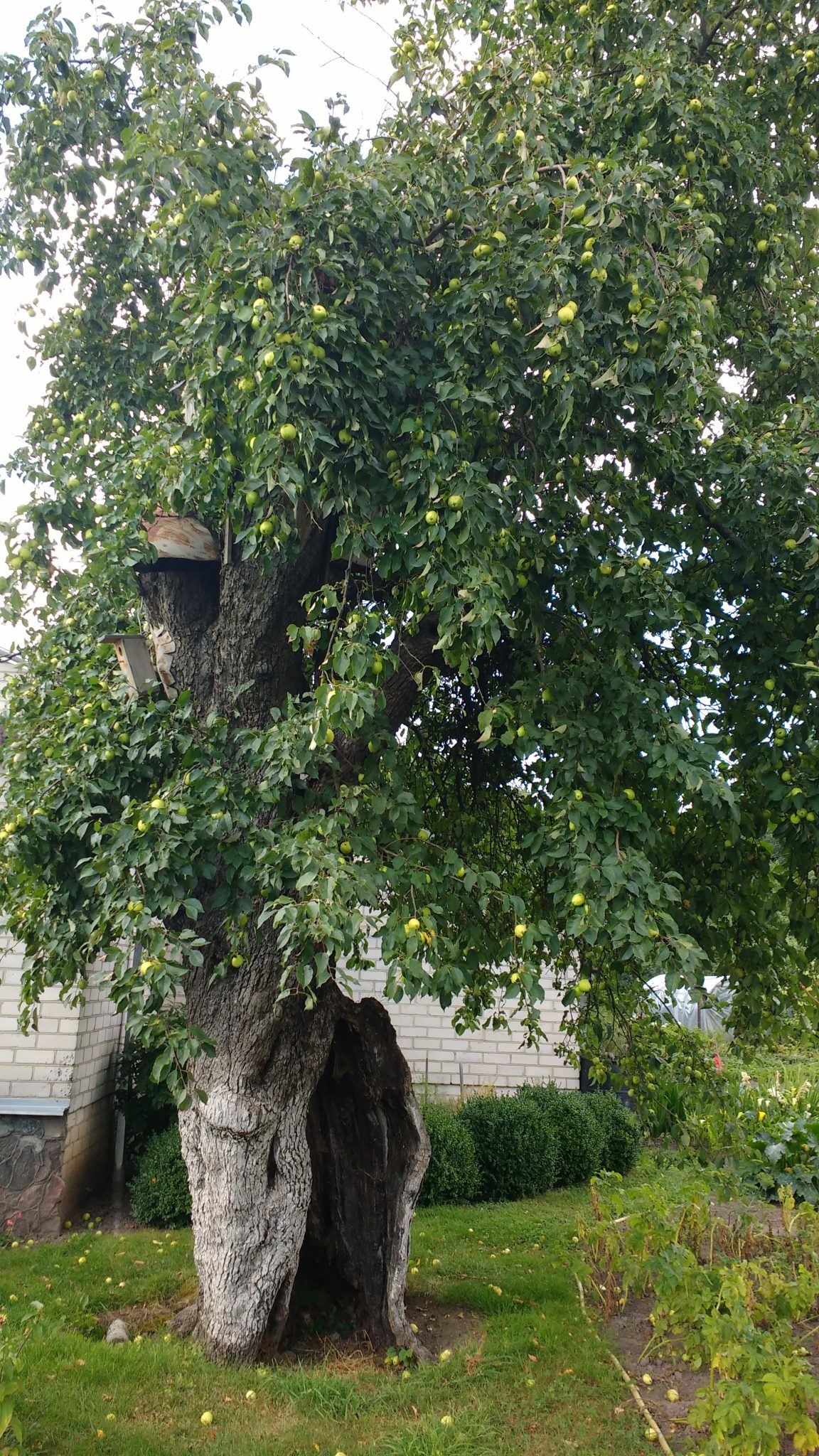
Project partners visited potential heritage gardens places in order to understand if they are suitable for the of Heritage Gardens Tourism product from tourism and horticultural point of view. All together 59 potential gardens in Latvia and 65 in Lithuania were inspected, from them project staff choose 26 HG objects in Latvia and 25 in Lithuania. Some very rear cultivars as apple – ‘Tabokinė’, ‘Lietuvos cukrinis’ ‘Beržininkų ananasas’, ‘Panemunės baltasis’, ‘Raudonasis alyvinis’, ‘Žemaičių grietininis’, ‘Montvilinis’ ‘Kronselinis, plum -‘Vietinė geltonoji’ and ‘Čirkšlė’ were identified in Lithuania. Apple cultivars ‘Bely Naliv’ and ‘Astrahanskoe Krasnoe’, pear cultivar ‘Ankstyvoji Dulia’ were found at Berkenele tourist site. These cultivars previously were not found in any known site in Latvia. During the project inventory and propagation of dying authentic accessions was done in order to ensure preservation of natural heritage orchards for future generations.
Very broad spectrum of heritage objects: museums, botanical gardens, manor houses, homesteads, memorial homesteads museums, private collections and farmers were selected. On the base of inspections, 7 itineraries of Heritage Gardens tour are created. 2 tours are local, 5 cross-border tours to encourage travelling in both countries and prolong the stay. A new tourist map has been issued. This map features 109 gardens that are open to visitors, 53 of them historical gardens which emphasis their values, as well as botanic gardens and collections of plants where you will learn about gardening traditions and history and see traditional types of fruits, vegetables, herbs, decorative trees, bushes and flowers in Latvia (Latgale, Kurzeme, Zemgale) and Lithuania (Aukštatija, Žemaitija).
Prepared Heritage Gardens tourism product development Guidelines will serve not only for increase of visitors but also will have recommendations on optimal maintenance and application of proper management in collections. Freely available guidelines will be dedicated not only for the project partners and target groups, but also could be used by other bodies interested in sustainable maintenance of nature heritage.
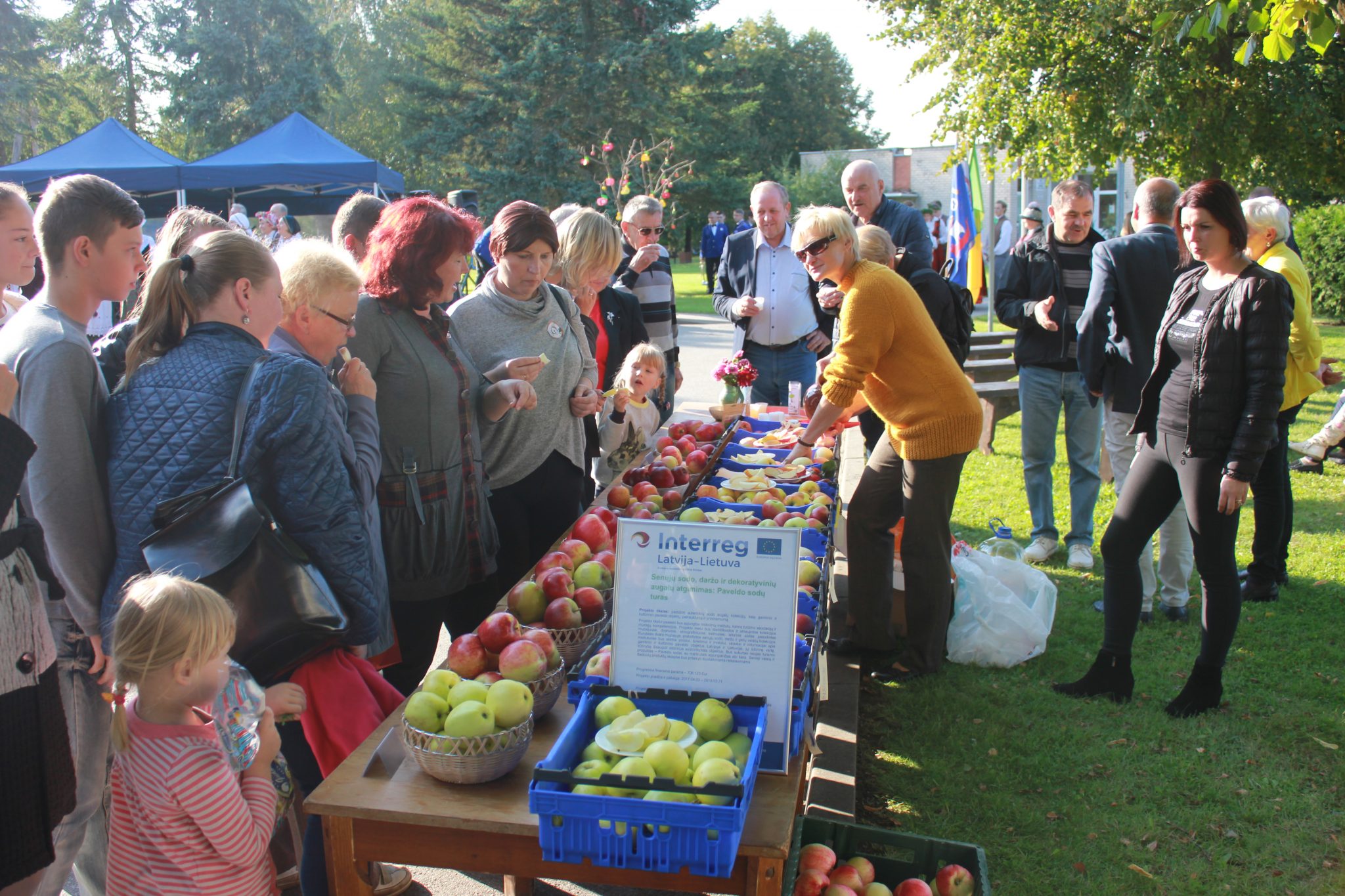
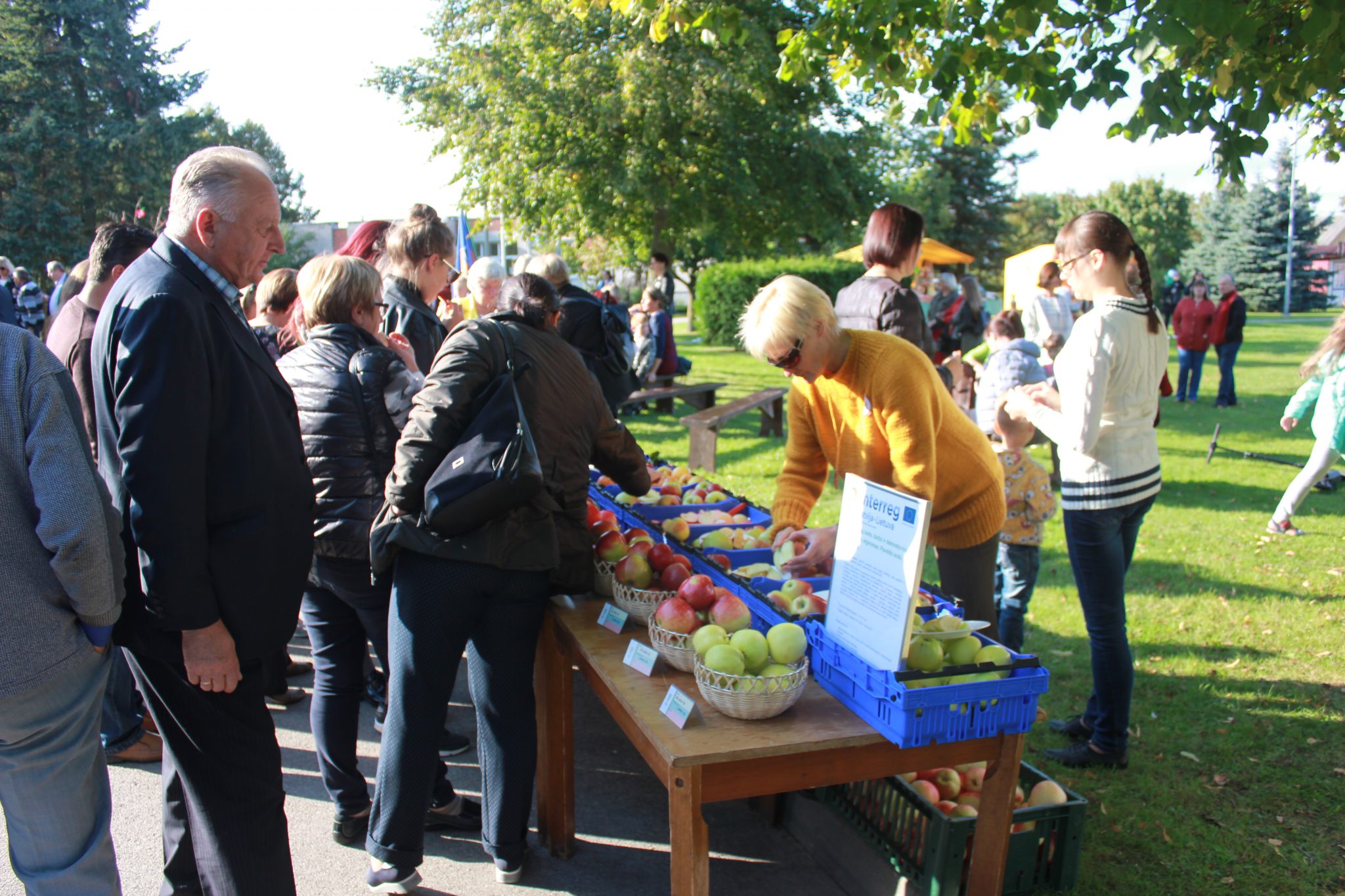
Promotion of Heritage Gardens tourism product was done during the seminars, Master classes, excursions, tourism exhibitions in Lithuania, Estonia, Latvia, Netherlands and Spain, 3 media tours in Latvia and Lithuania. Brochures “Heritage Gardens: cultivar catalogue” and “Obelynė History and the Present” and booklet “Ancient Latvian and Lithuanian recipes with modern twist” were published.
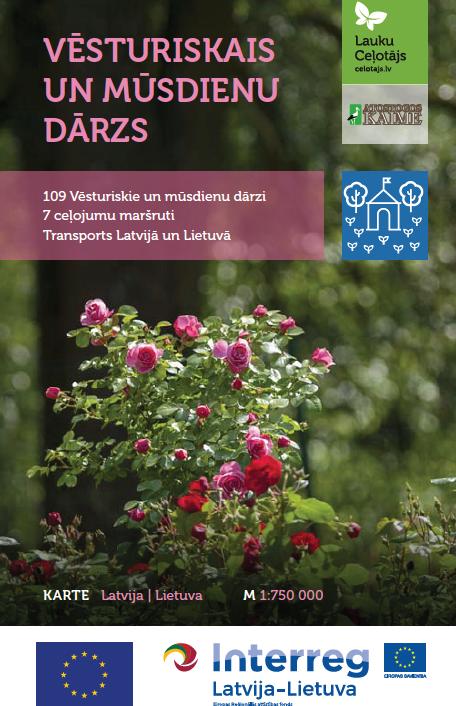 A new tourist map has been issued that will take you on a journey through the historical and contemporary gardens of Latvia and Lithuania. This map features 109 gardens that are open to visitors, 53 of them historical gardens which emphasis their values, as well as botanic gardens and collections of plants where you will learn about gardening traditions and history and see traditional types of fruits, vegetables, herbs, decorative trees, bushes and flowers in Latvia (Latgale, Kurzeme, Zemgale) and Lithuania (Aukštatija, Žemaitija). Included also several landscape gardens where you can get ideas for your garden design, as well as farms dealing with berry and fruit processing.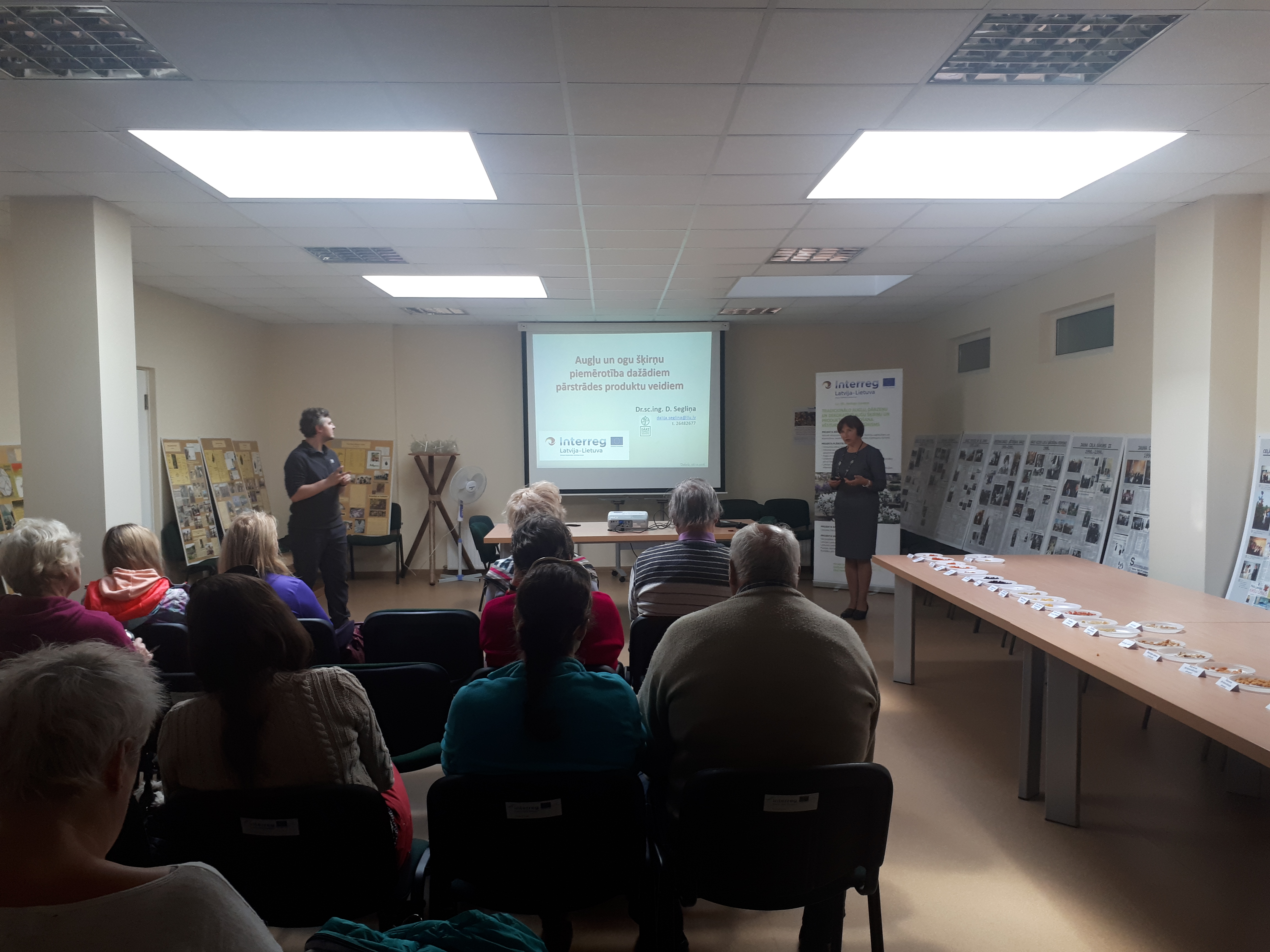
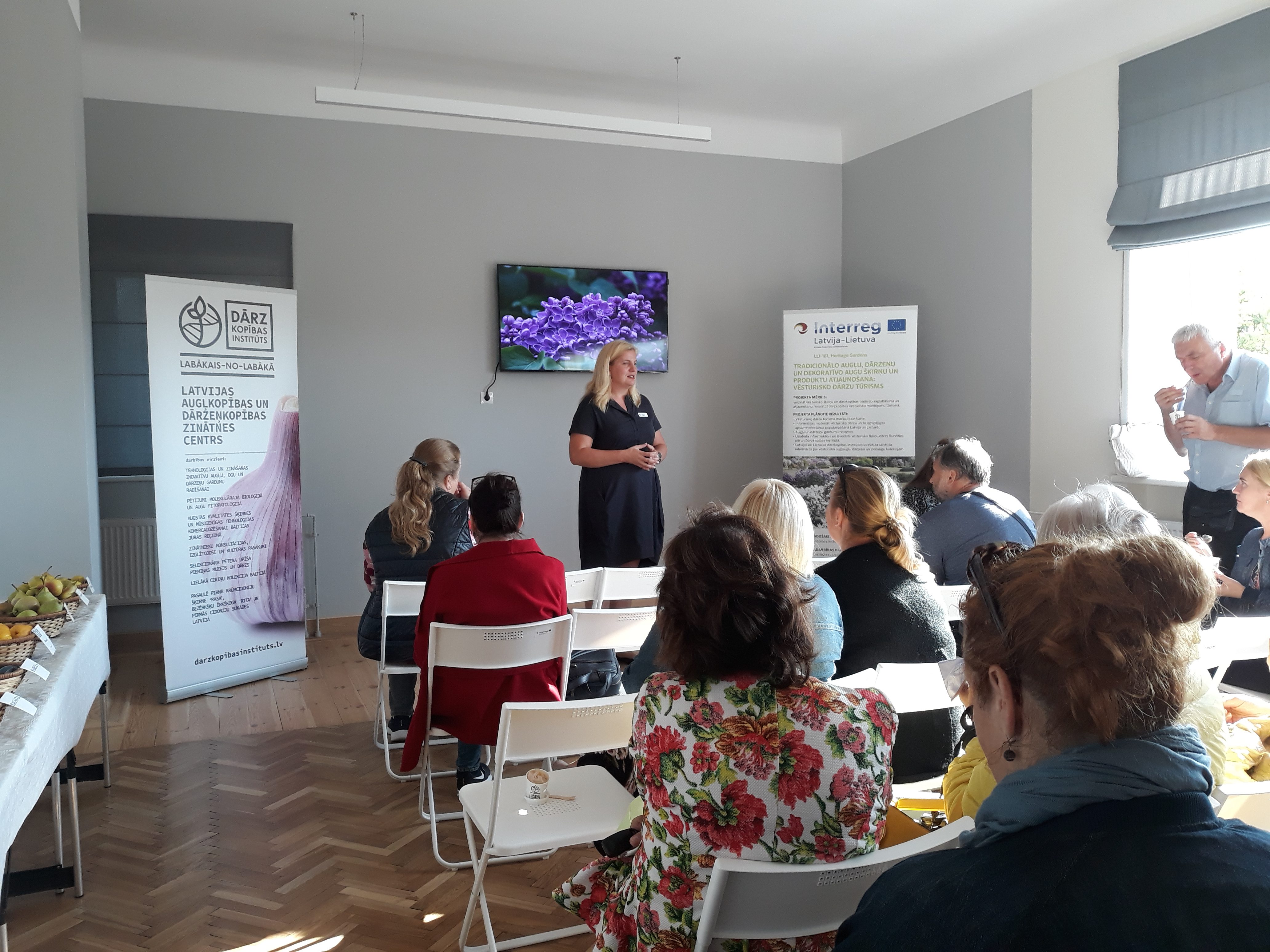
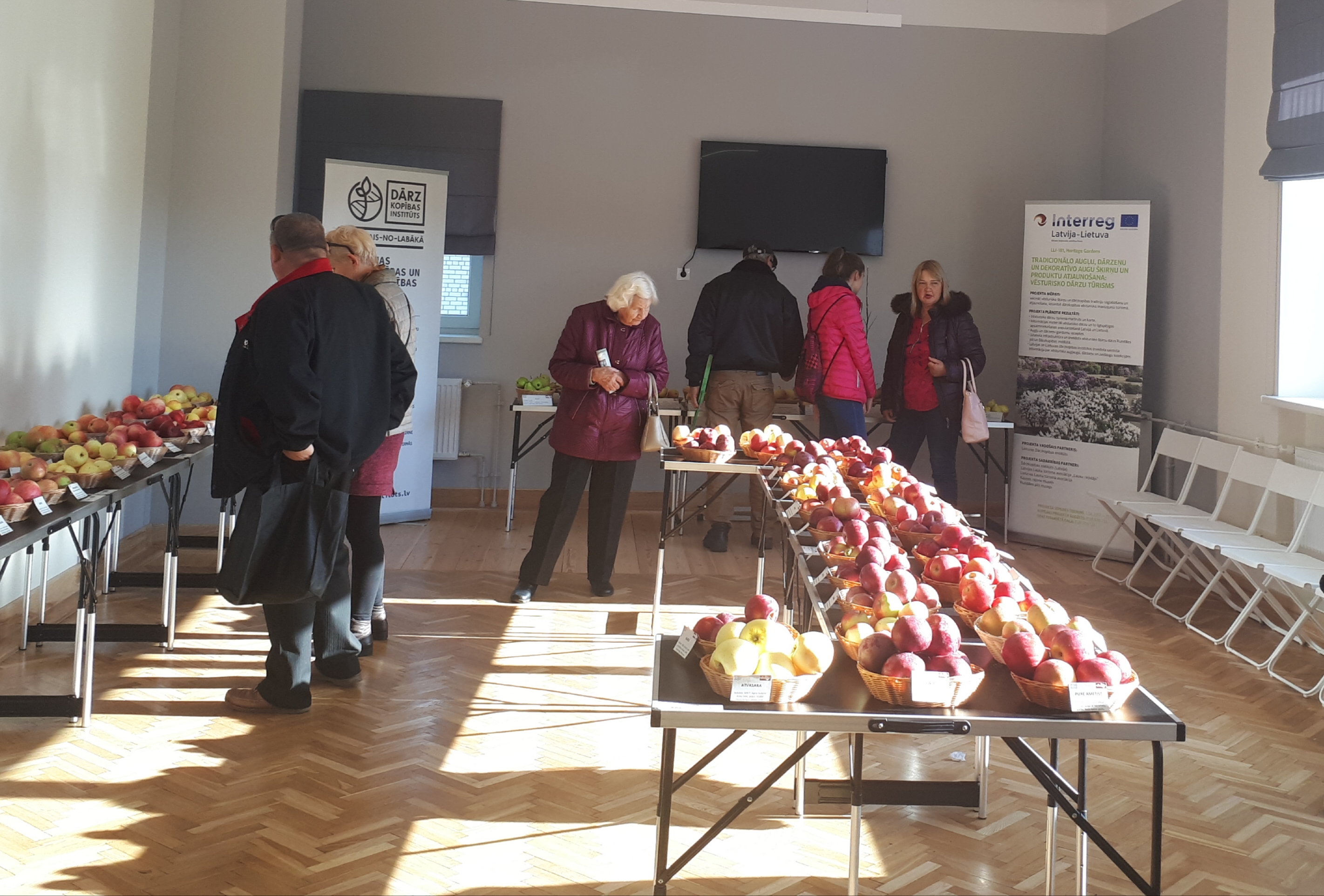
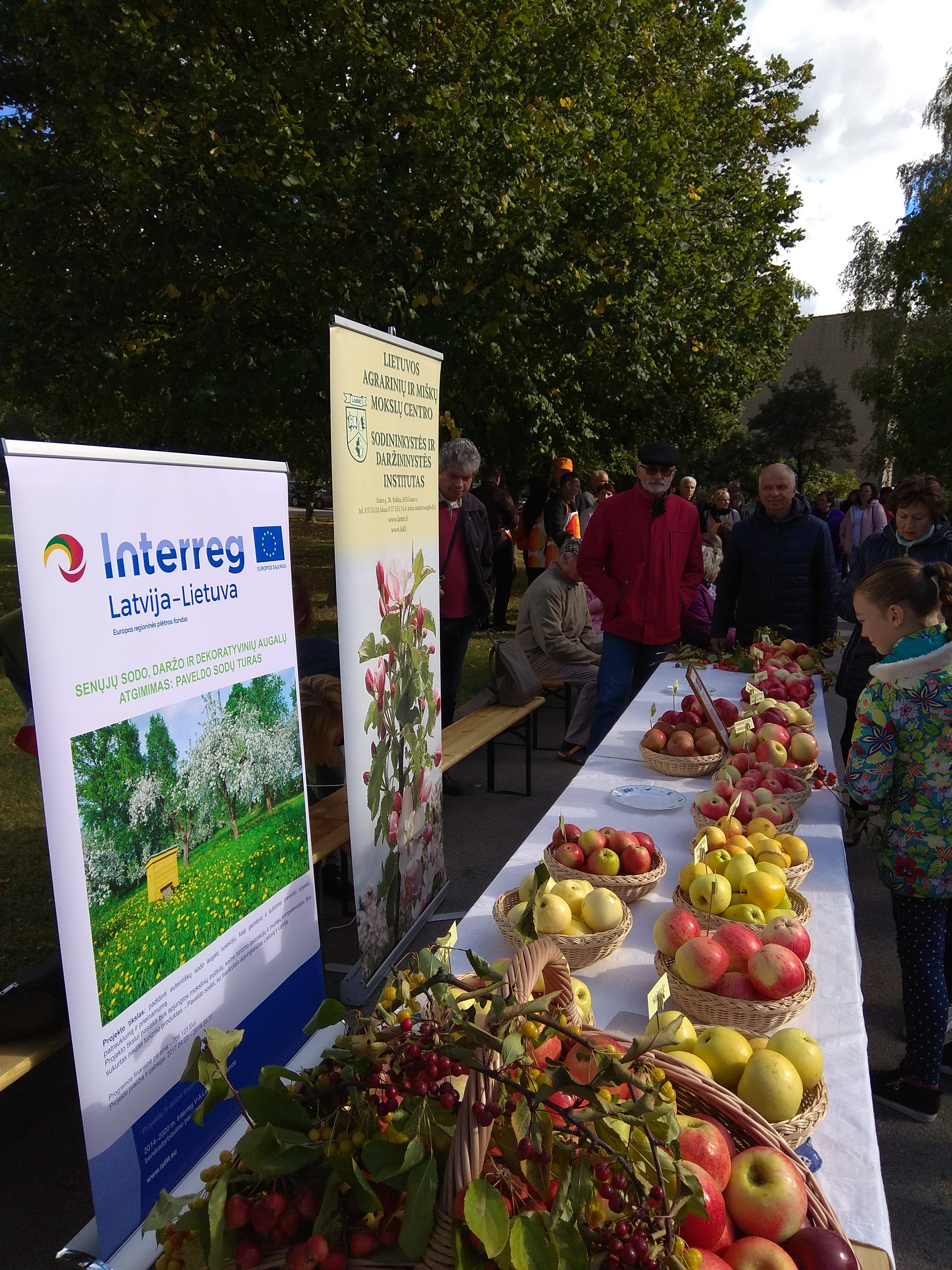
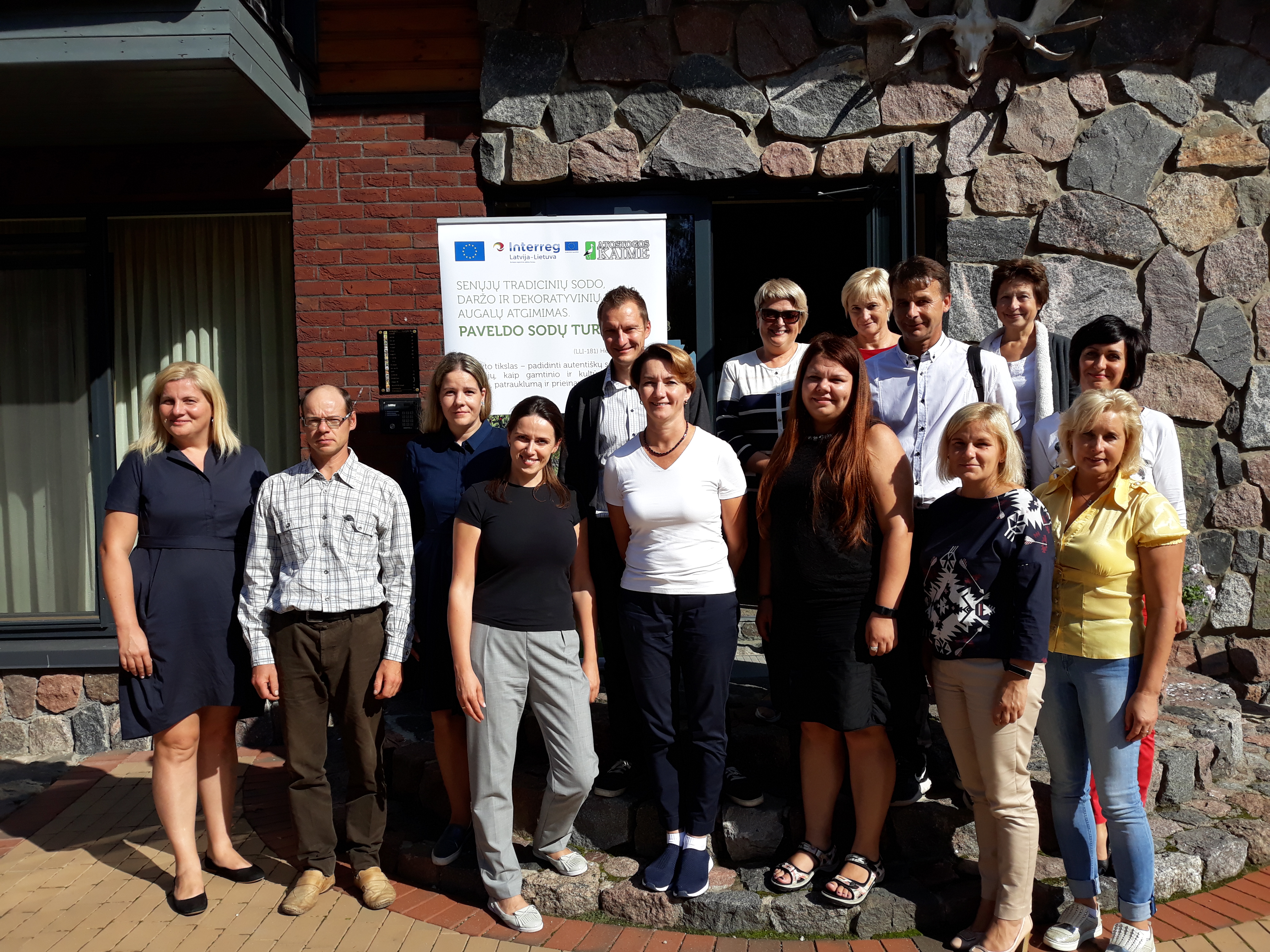
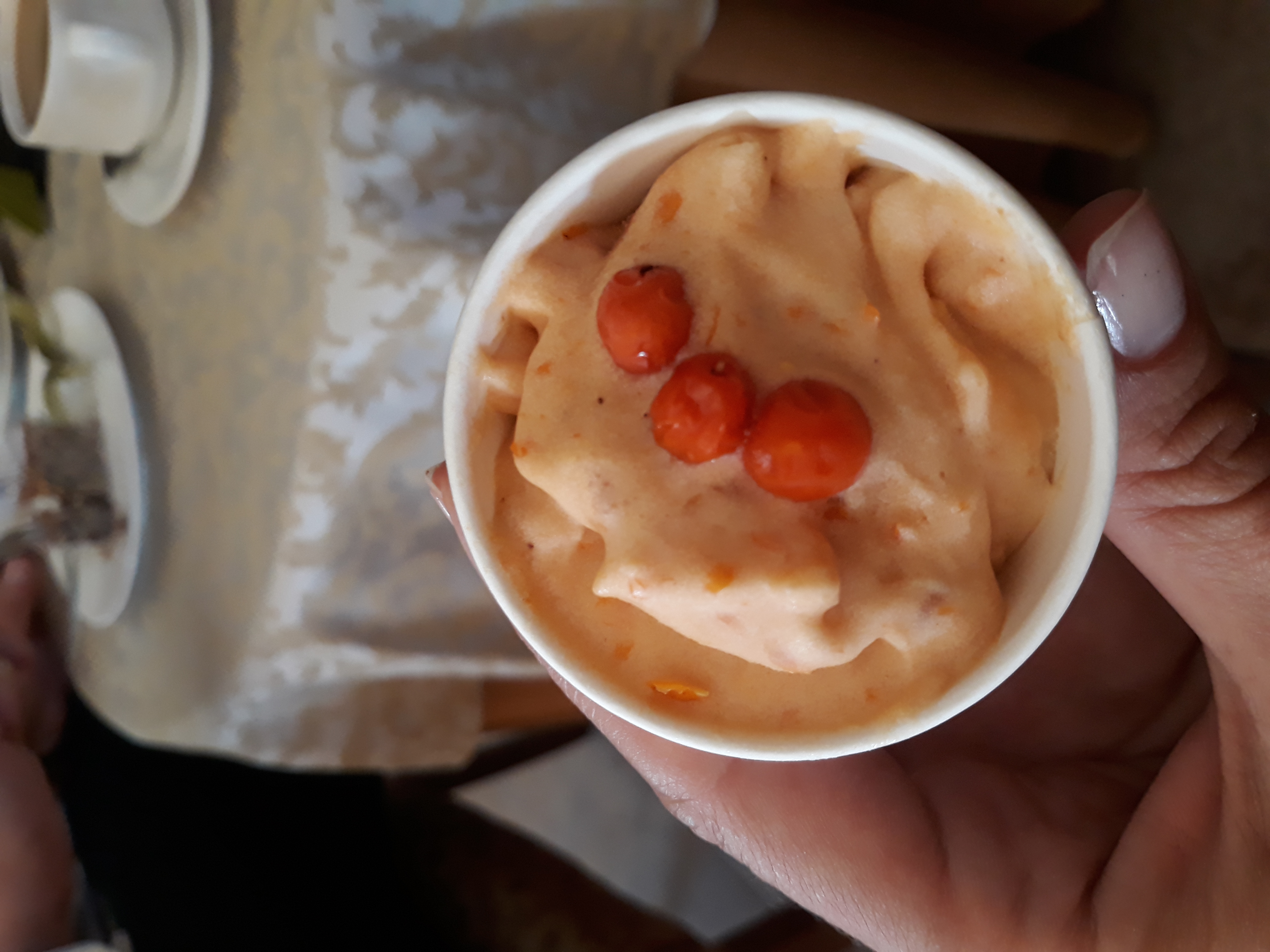
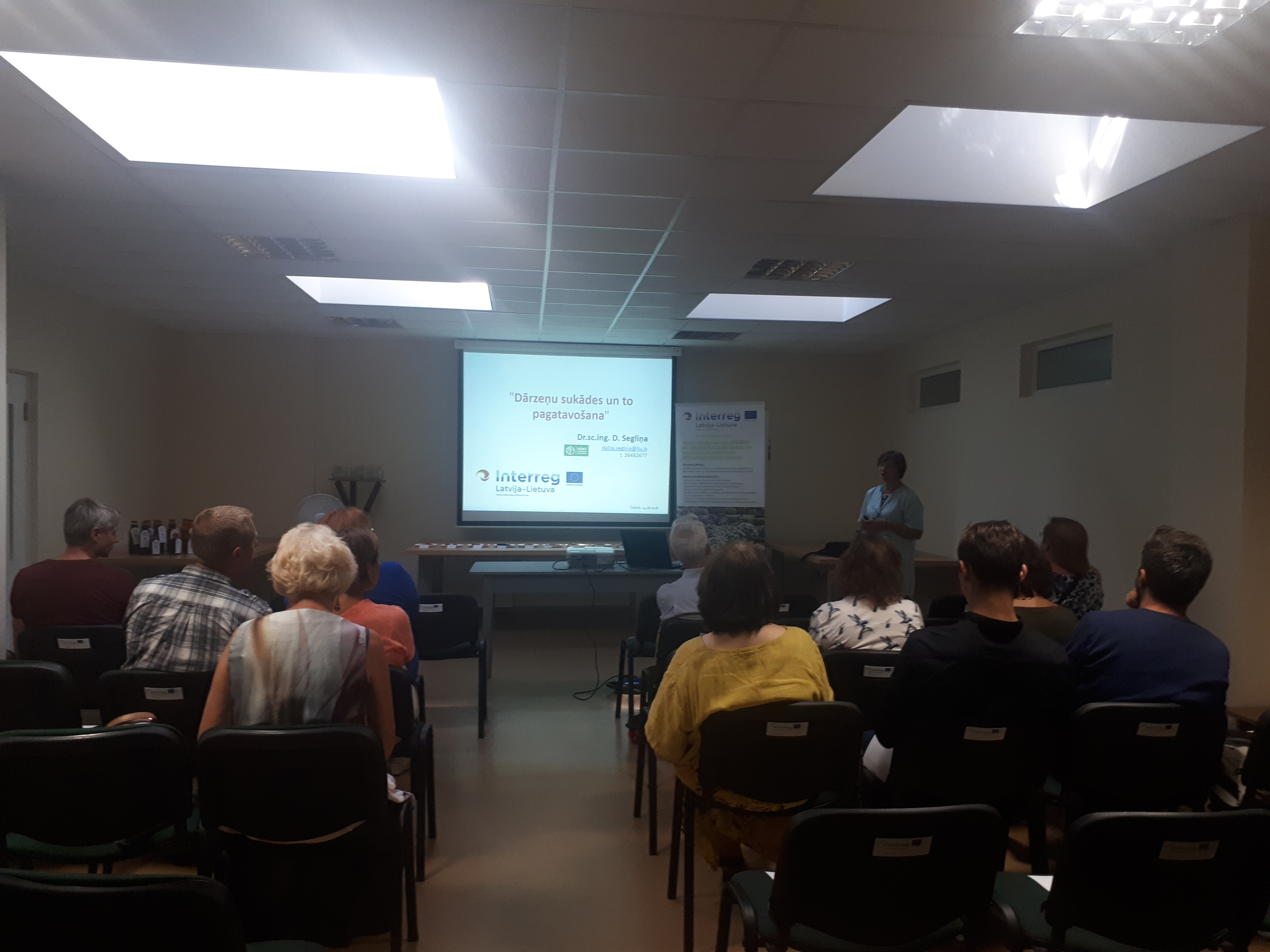
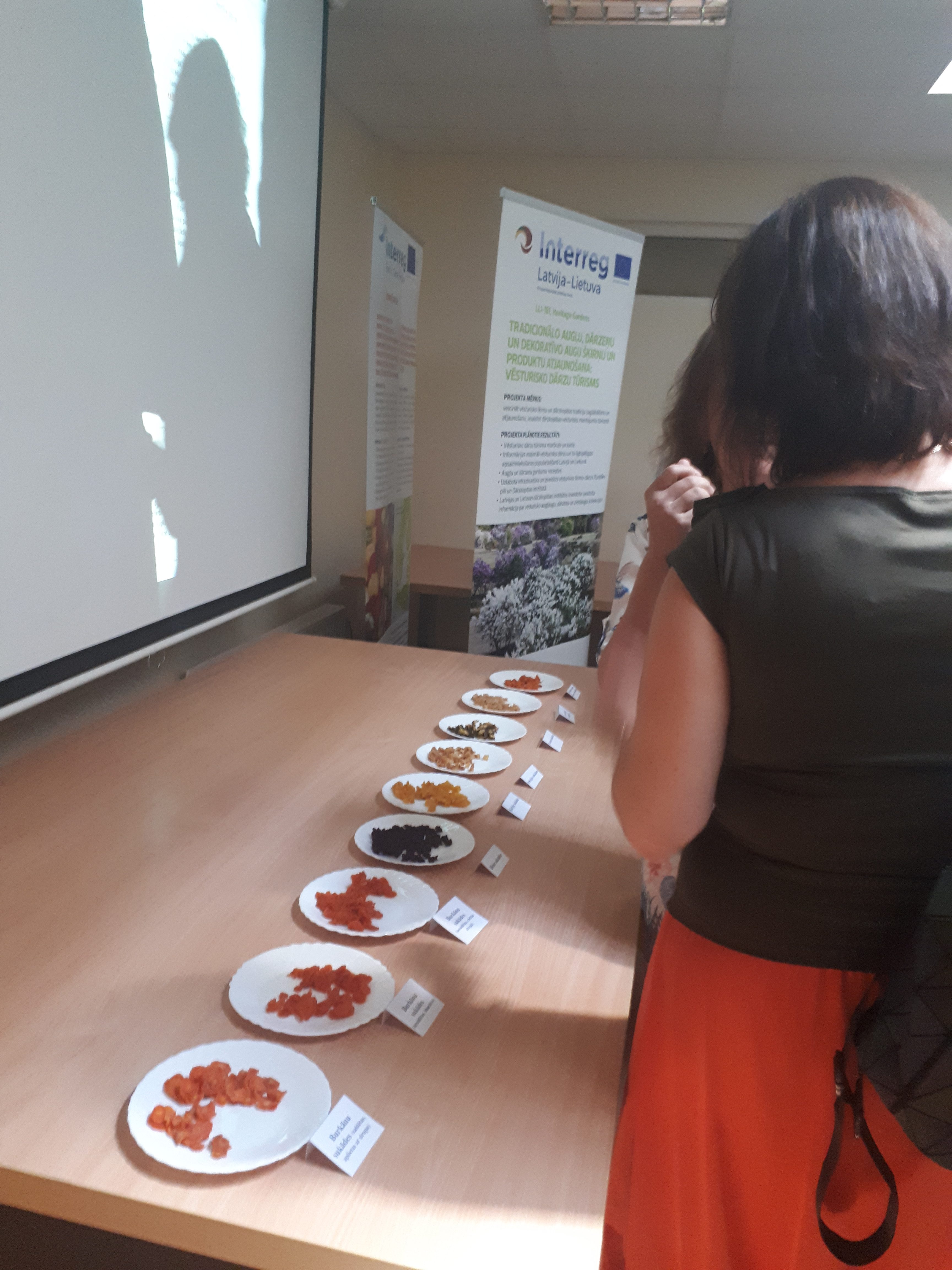
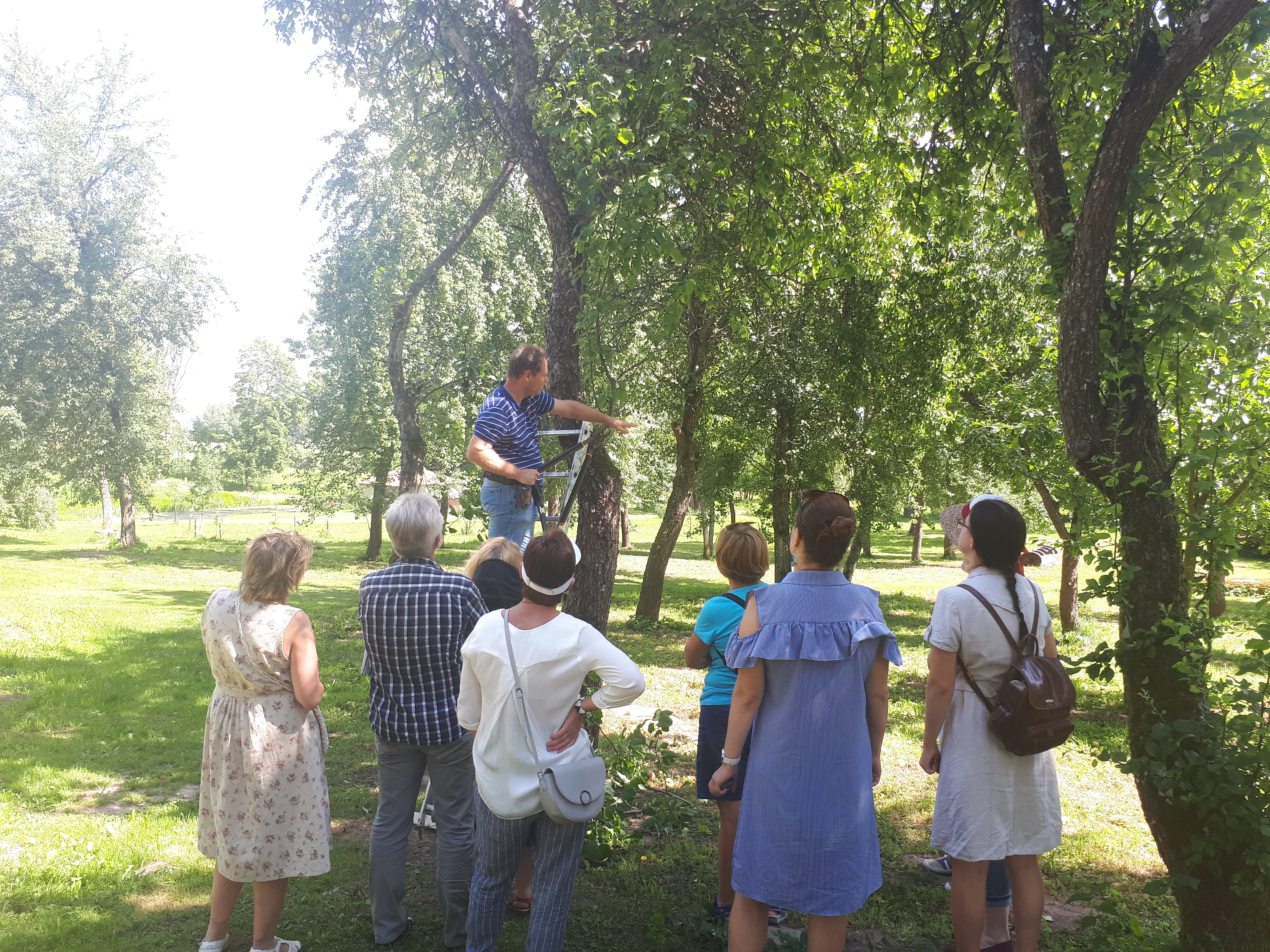
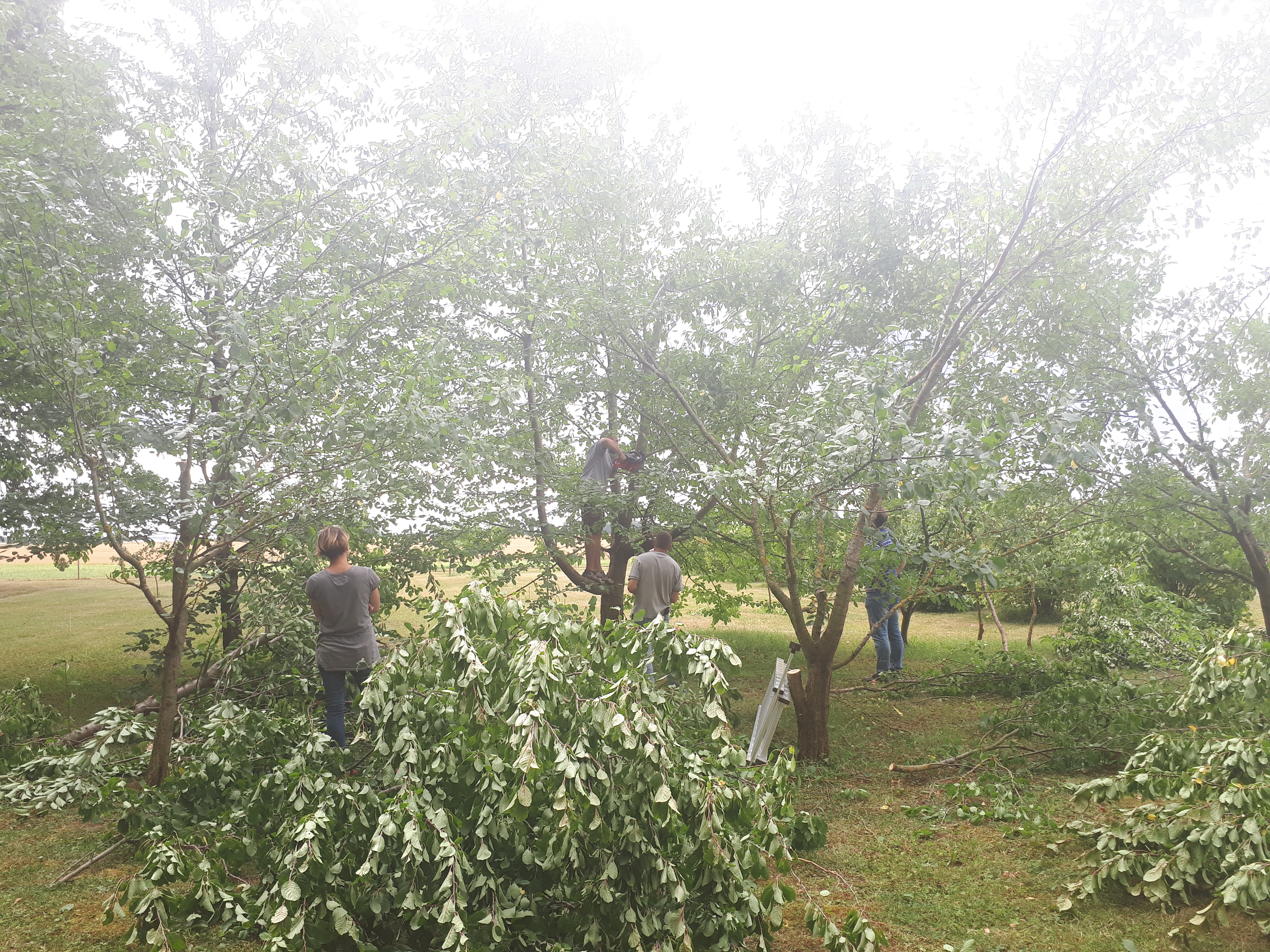 On the 1st of August the garden owners met in the Berķeneles Manor (Rainis House) for the fruit tree formation masterclass in the frame of the project “Revival of old traditional fruit, vegetable and ornamental plants and their products: Heritage Gardens Tour”.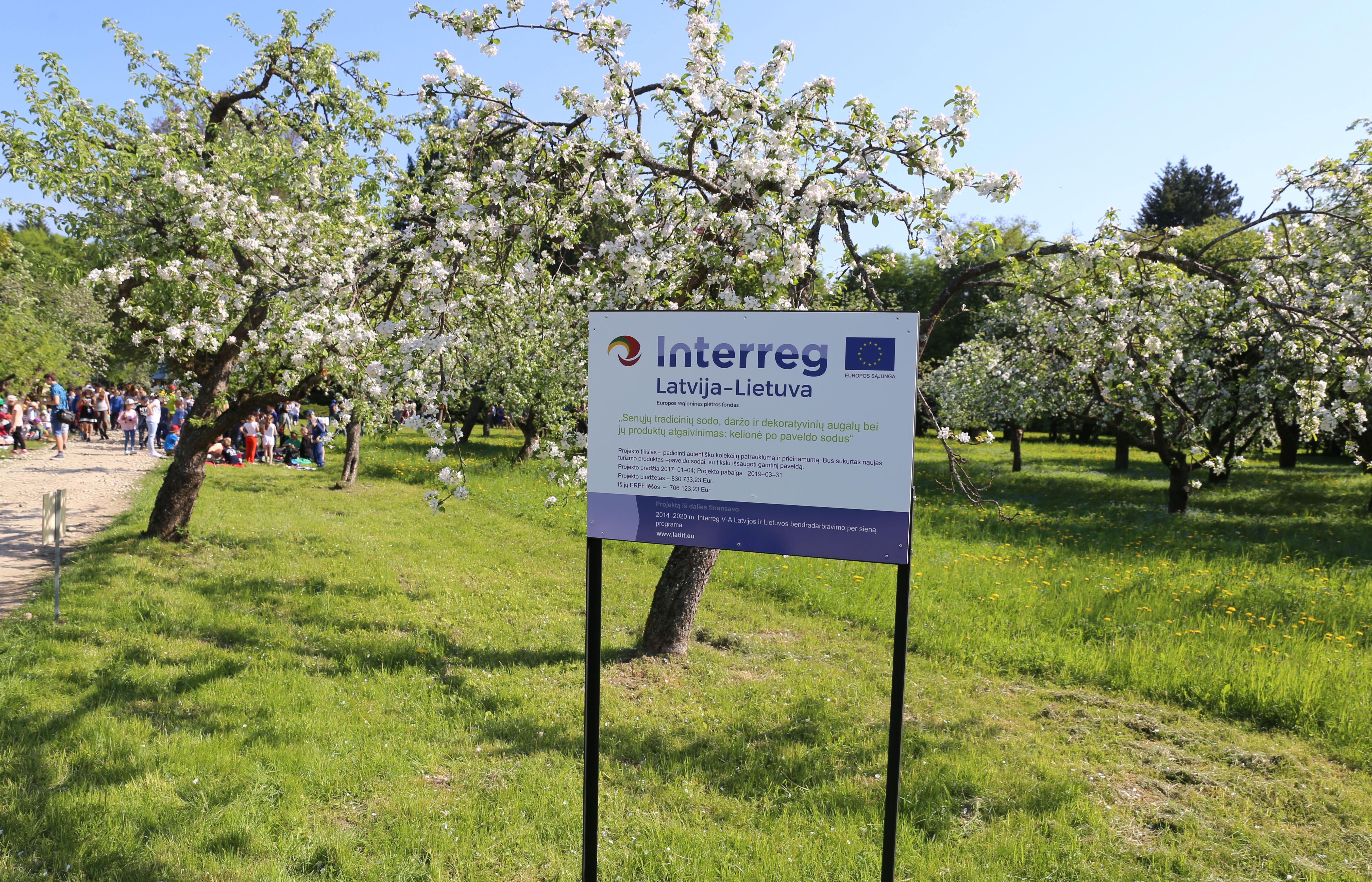
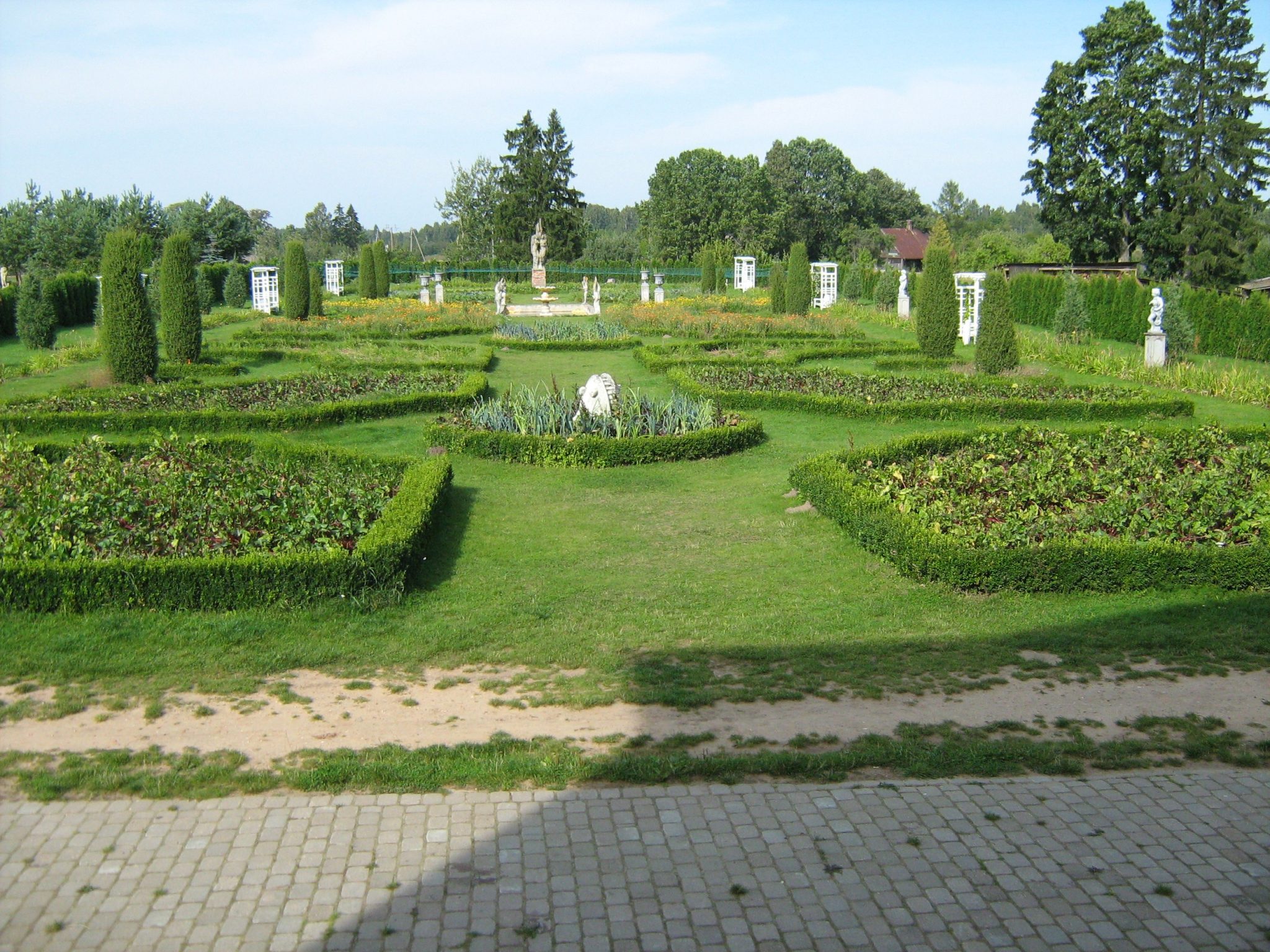 Brukna manor (Dāviņu pag.) was built in 18th century, but during Soviet times little was left. Now it is being restored, together with a garden and vineyard. The most interesting is the renaissance style vegetable and herb garden maintained by the manor’s inhabitants. Plant species in this garden change very year. Only a smaller part of the 20 ha area is park and all is newly planted, but it is worth seeing, especially the rosarium and the vineyard. There are also rare trees like a young edible chestnut (Castanea sativa) and old apple ‘Grushovka Moskovskaya’. Brukna is a unique place working in spiritual and social rehabilitation of people with problems. It has a newly built church and smaller prayer houses of different Christian confessions. Many sculptures which decorate the garden have been donated